Get Healthy!
- Posted April 16, 2026
E-Bikes And E-Scooters A Growing Menace On City Streets, Study Says
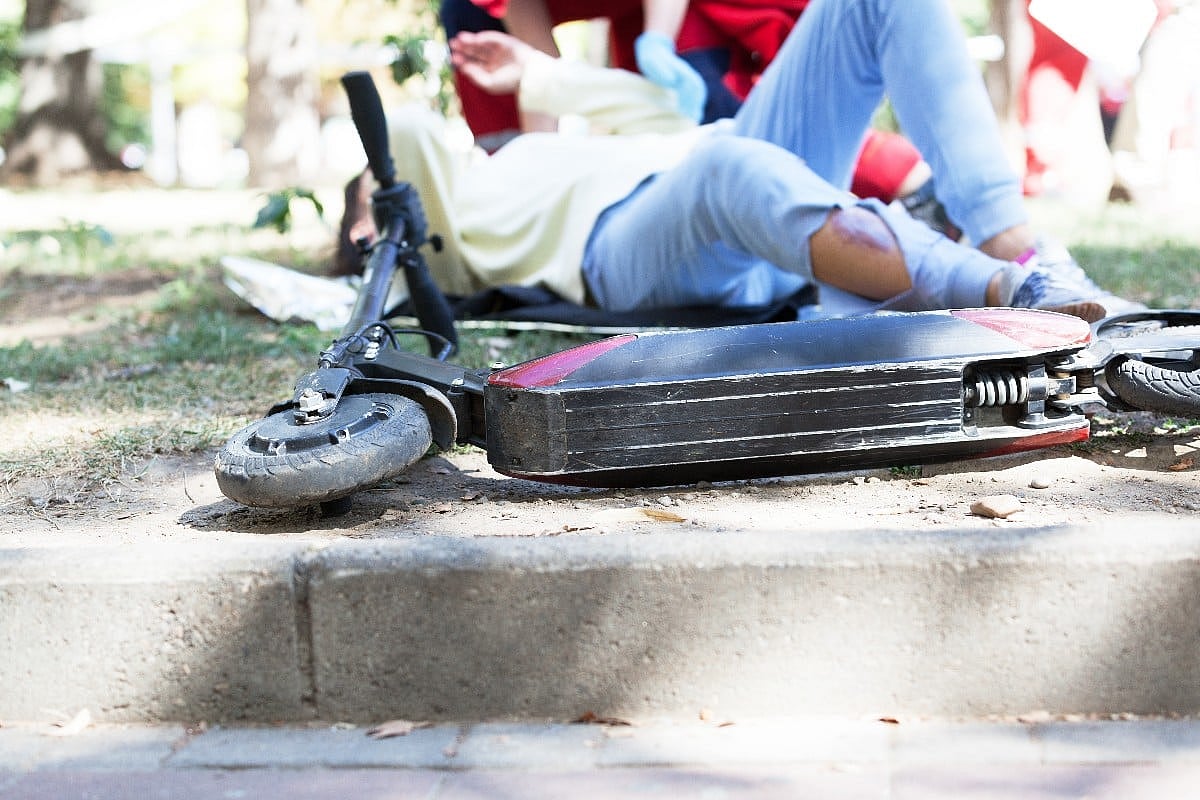
Battery-driven bicycles and scooters are becoming a public hazard, endangering both riders and pedestrians, a new study reports.
E-bike and e-scooter crashes now account for more than half of bike- and scooter-related trauma cases treated at a major New York City hospital, up from less than 1 in 10 a handful of years ago, researchers reported April 15 in the journal Neurosurgery.
One-third of patients received a traumatic brain injury from these collisions, and pedestrians suffer brain injuries at nearly double the rate of riders, researchers found.
“Our study shows that micromobility injuries are producing serious brain and spinal trauma that demands neurosurgical care at a scale we haven’t seen before,” lead researcher Dr. Hannah Weiss said in a news release. She’s a neurosurgery resident at NYU Grossman School of Medicine in New York City.
This threat constitutes “a new urban conflict,” according to an accompanying editorial written by Dr. Douglas Kondziolka, editor-in-chief of Neurosurgery.
“Less a bicycle than a thin-framed motorcycle barreling down city ‘bike lanes’ at speeds faster than those allowed for cars, these people movers are now all over,” Kondziolka wrote.
For the new study, researchers tracked all injuries treated at Bellevue Hospital Center between 2018 and 2023 that resulted from either battery- or pedal-powered bike and scooter wrecks.
Overall, 914 patients were treated at the hospital during the five-year period for injuries sustained in a bike or scooter accident.
The number of crashes increased steadily over time, with e-bikes and e-scooters representing a growing share of injuries – 55% of cases in 2023, up from only 8% in 2018.
More than two-thirds (69%) of patients required admission to the hospital, and 30% needed intensive care. The wrecks accounted for nearly 1 in 15 trauma admissions at the hospital during the study period.
One third (33%) of patients suffered a traumatic brain injury from the crash, results showed. Nearly 57% of pedestrians struck by a bike or scooter suffered a brain injury, compared with 31% of riders.
Battery-propelled bikes and scooters can reach higher speeds, making them more dangerous for pedestrians, researchers noted in their paper.
Injuries peaked during the evening hours between 6 p.m. and 8 p.m., suggesting that e-bike dinner deliveries might play a role in some of these wrecks, researchers said.
There’s also some evidence that riders aren’t taking steps to protect their safety.
Fewer than one-third of riders wore helmets, and this was linked to significantly higher rates of brain and facial injuries, researchers said.
In addition, 1 in 5 patients tested positive for alcohol, and this was tied to worse brain injuries and lower odds they were wearing a helmet.
“In a busy urban setting, we are seeing more and more of these injuries firsthand,” Weiss said. “The data point to actionable solutions -- helmet use, safer bike lane design and enforcement --that could prevent many of these injuries and better protect both riders and pedestrians, who in our study often sustained even more severe brain injuries than riders themselves.”
Another researcher described the findings as significant.
"Our findings make clear that urban infrastructure has not kept pace with the rapid rise of electric bikes and scooters," said senior researcher Dr. Paul Huang, an associate professor of neurosurgery at NYU Grossman School of Medicine.
“Future studies should track these injuries across multiple cities and measure whether protected bike lanes, helmet programs and speed enforcement actually reduce the number of brain and spine surgeries we perform,” he said in a news release.
In his editorial, Kondziolka recommended “intensive and mandated training for anyone wanting to get aboard one of these trauma generators.”
He added: “We do this for cars, we do it for aircraft, and we do it to drive a boat in a city harbor. This is not just like ‘riding a bike.’ ”
More information
Harvard Medical School has more on e-bike and e-scooter safety.
SOURCE: Congress of Neurological Surgeons, news release, April 15, 2026
